Thoughts on Modularity
The Apple Watch poses a question: unlike the timeless Rolex it's being compared to, can technology products justify luxury pricing when obsolescence is inevitable?
During the last Apple Keynote there was no mention of the possibility of upgrading the Apple Watch, and the topic is getting really interesting — because this intersection between performance and obsolescence is something technology has a hard time dealing with.
When it comes to technology, the rules are clear: you know what you’re getting into — early obsolescence, more memory at cheaper prices, and faster processors every other year. But when it comes to fashion and jewelry, other rules apply. A $20,000 Rolex is meant to be handed down to your son; you are paying for perpetuity, to some extent. But when you add technology into the equation, that perpetuity is fundamentally constrained by Moore’s Law.
Before the Apple Watch was announced, there was some speculation around upgradability, and even programs where you traded in the old device to repurchase a newer model. But during the Keynote, there was no official word on this. It’s also true that afterwards there were some articles claiming the battery could be replaceable — but that’s about it.
My thoughts on upgradability have been evolving and bouncing back and forth over these past few weeks. That’s why I wanted to lay out some facts that might help better understand the issue.
I’ve always thought of upgradability as a fundamental piece of the technology lifecycle. Initiatives like Project Ara made me believe that it was actually possible to build a sustainable business out of modular technology. It makes so much sense. They still have to prove everything, of course, but they are clearly exploring an interesting path.
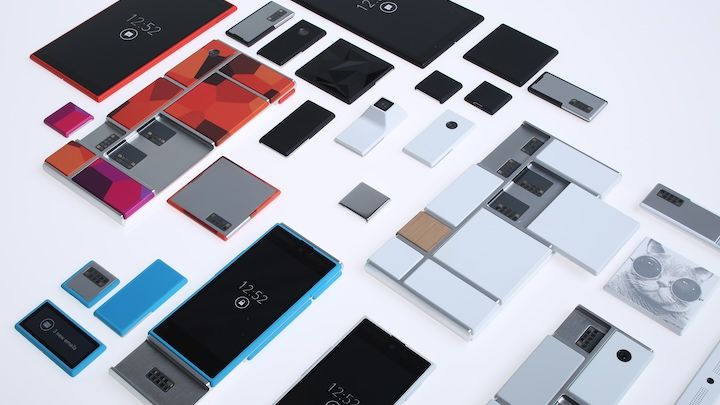
The goal of upgradability is to extend the lifecycle of a device so that, in the end, we produce less waste — by replacing components with newer ones as technology evolves, while maintaining (at least for a longer period of time) the basic structure that holds those components together.
When the Apple Watch was announced in September, rumors about its upgradability started to pop up. It made sense. But when you think of Apple and upgradability, the trend is clear: none of Apple’s newer devices are upgradable, and the ones that once were — like the iMac or the MacBook, no longer are.
So why would the Apple Watch be any different? I don’t have the answer to that, but there were two reasons that fueled this argument:
- The S1 SoC seemed to be specially designed to be swapped as a bundle, making it easier to replace all the components in a single operation.
- The jewelry approach — because watches are meant to endure. If the Apple Watch became obsolete in three years, nobody would want one.
I understand the S1 argument, and it makes sense. But imagine you bought the original iPhone in 2007 and today walked into an Apple Store to join an “Upgradability Program.” See where I’m going? There is such a fundamental misalignment between how the original iPhone and the current iPhone 6 were conceived. The iPhone was meant to be a complement to the Mac; now it’s the centerpiece of our digital lives.
It’s not just about upgrading the processor, the RAM, the antennas — there’s a lot more than just “specs” to upgrade. Some might say “The S1!” Yes, it’s a closed structure that could be easily replaced, but: 1) it may have been designed that way to perform underwater, for all we know; and 2) this is the first iteration of a product that might do a lot more in just three years. The same thing that happened with the iPhone will happen with the Apple Watch, and these fundamental design changes driven by technology can’t be planned ahead of time.
The other argument is the jewelry angle. This was the one that kept my hopes for upgradability alive — but I recently found myself with mixed thoughts again. Imagine Apple had only released the Sport Edition. It’d just be called the Apple Watch: aluminum case, rubber band, $349 and you’re good to go. If that were the case, would we even be discussing upgradability? I don’t think so. What would be the difference then between an iPhone and an Apple Watch? Both are pieces of technology we use in a particular way. We don’t think differently about something because an iMac sits on a desk and an iPhone rests in a pocket. So why make the distinction between pocket and wrist? At the end of the day, when the battery dies or it feels “slow,” you go and buy another one. End of discussion.
But here’s the real crux of it. It’s not the idea of a watch that makes you think of upgradability — it’s the idea of a luxury watch as a perpetual object. The conflicting point is how to justify selling a device that costs the same as a Rolex but will be obsolete in five years, while the Rolex is built to last forever. So the problem isn’t that this is a watch — the problem is that there are watches on the market that cost a lot of money and whose “strong suit” is precisely that they endure.
This is the fundamental wrong assumption. We are comparing these devices on an obsolescence/durability basis and missing the bigger picture. Yes, when you buy a Rolex you expect durability to be the main feature — but when you buy an Apple Watch, you’re getting a lot of other features you simply won’t get from a mechanical watch. That has to be factored into the price. The short story is that the Apple Watch may not be competing “directly” against luxury watches at all. It’s a whole other category.
We can’t judge all of the Apple Watch’s value on a time-aging basis, because it’s doing a completely different job than a mechanical watch does. It would be like blaming a mechanical watch for never getting software updates. A couple of examples that might help illustrate this:
- There’s a huge market for $1,000 bags that might be used three times in a lifetime. People buy them not on a rational basis, but driven by a kind of aspiration — the same aspiration the Apple Watch is trying to tap into, in its own way.
- Some people pay $25,000 for a transatlantic flight that lasts fifteen hours, while others take the same flight, to the same destination, in the same amount of time, at a fraction of the cost. Are those paying $25K being irrational? I don’t think so. And no one complains about not arriving any sooner for having paid more. In other words, judging the Apple Watch as cheap or expensive only by comparing it to a traditional mechanical watch is both wrong and unfair.
I would never buy a gold watch — not Apple’s, not Rolex’s — but I can see why many people would want one. Is this a huge market? I don’t think so. But maybe the point of selling this watch is less about volume and more about drawing a line — separating Apple even further from Samsung and the rest. Nobody knows yet how well it will sell, but it is clearly an interesting move, and the first serious attempt to overlap fashion and technology in ways that have never been done before.